Kind, not mined
Are lab-grown diamonds real diamonds?
Yes. A lab-grown diamond is chemically, physically and optically identical to a mined diamond. Both are pure crystallised carbon in the same cubic structure, both measure 10 on the Mohs hardness scale, and both have a refractive index of 2.42.
The only difference is where the crystal formed. A lab-grown stone is grown in a reactor over roughly two to four weeks, while a mined stone formed underground over a far longer geological timescale. Gemmological laboratories including IGI and GIA grade lab-grown diamonds on the same 4Cs scale and issue certificates stating the growth method. In 2018 the US Federal Trade Commission removed the word "natural" from its definition of a diamond for this reason.

Kind, not mined
What is the difference between a lab-grown diamond, moissanite and cubic zirconia?
They are three different materials, not three grades of the same thing. A lab-grown diamond is carbon and is identical to a mined diamond. Moissanite is silicon carbide, a separate mineral that is slightly softer than diamond but throws noticeably more coloured fire. Cubic zirconia is zirconium dioxide, softer again, and the only one of the three that dulls with everyday wear.
WHY IT MATTERS
The Stone
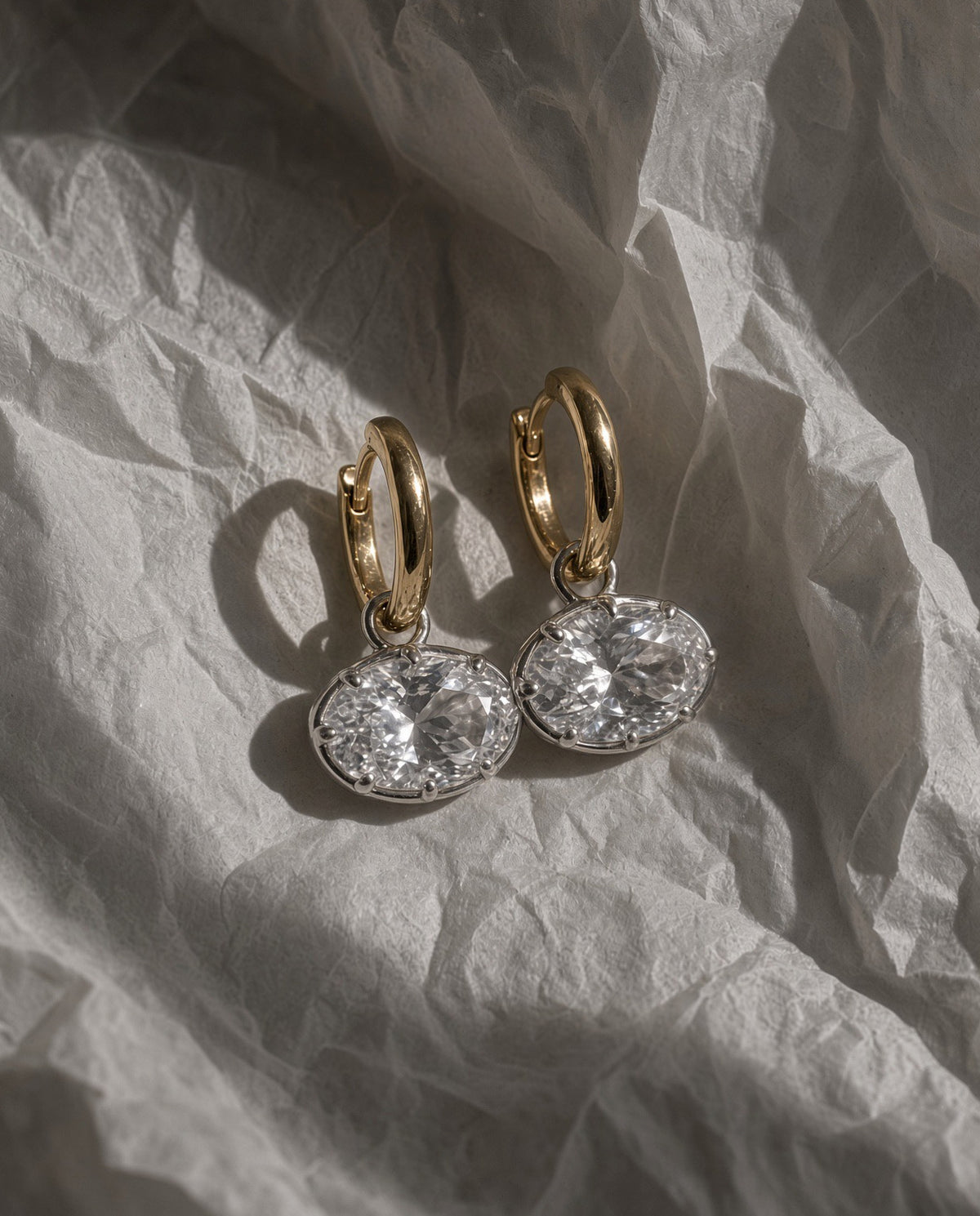
Lab-grown diamonds are chemically and visually identical to mined stones. Same brilliance, same hardness, same beauty created with intention, not extraction.
The Planet
Traditional diamond mining carries significant environmental and social costs from land disruption to murky supply chains. We believe there's a better way to do luxury.
The Value
By removing the volatility of mined diamond pricing, we're able to focus on what matters: exceptional design, craftsmanship and pieces that are worth every penny.
Add a piece to your collection